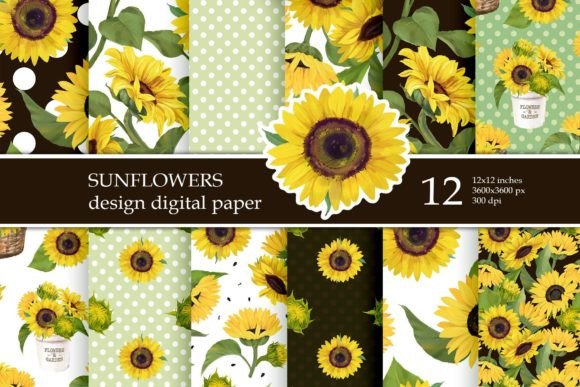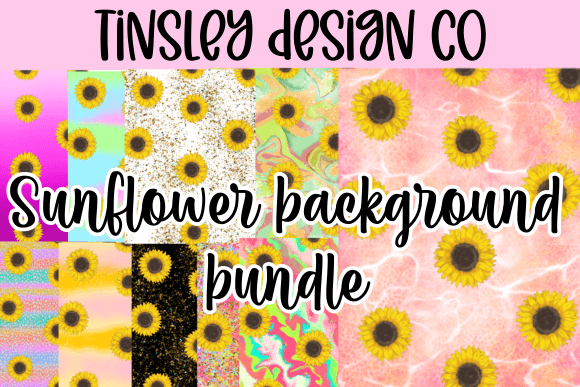
Sunflower Patterns Digital Background
A Sunflower Patterns Digital Background is a high-resolution, transparent PNG file designed for immediate integration into creative and commercial workflows. Unlike SVG cut files meant exclusively for die-cutting machines, this asset retains full layer integrity and crisp edge definition while supporting print-and-cut functionality on Cricut, Silhouette, and other compatible cutting systems. Its transparency allows seamless layering over photos, textures, or solid-color bases — making it equally functional in digital design software (like Adobe Photoshop, Canva, or Affinity Designer) and physical production environments.
Where It Fits in Your Creative Process
The Sunflower Patterns Digital Background isn’t a standalone product — it’s a workflow accelerator. Think of it as a reusable foundation rather than a one-off decoration. Before starting a project, you might select it to establish visual tone: warm, organic, uplifting. During execution, it serves as a consistent backdrop across multiple deliverables — from a single tumbler wrap to an entire merch line. After final output, its versatility supports repurposing: the same file can become part of a social media carousel, a printed gift card, or a background for a product mockup used in your online shop.
This kind of digital background works best when treated like a modular component — something you store in an organized asset library, tag with descriptive metadata (e.g., “sunflower,” “botanical,” “transparent-png,” “print-and-cut-ready”), and pull into projects based on mood, seasonality, or brand alignment. For small business owners launching a spring collection, it eliminates hours spent building custom patterns from scratch. For educators designing classroom posters, it adds professional polish without requiring advanced graphic skills.
Practical Use Cases Across Mediums
Because it’s delivered as a PNG with alpha transparency, the Sunflower Patterns Digital Background adapts cleanly to diverse applications:
- Resin crafts: Import into design software, scale to fit bezel dimensions, then print onto adhesive-backed paper for mold lining or embedment templates.
- Car freshies & cardstock crafts: Use with print-and-cut settings to ensure precise outlines around sunflower motifs — ideal for layered paper flowers or scented clay shapes.
- Scrapbooking & POD: Layer beneath journaling blocks or photo frames in digital scrap kits; export at 300 DPI for premium print quality on photo books or greeting cards.
- Sublimation & screen printing: Flatten layers in your editing software, convert to CMYK if required by your printer, and align with garment templates before sending to press.
- Jewelry & keychain design: Resize to match blank pendant or acrylic keychain dimensions, then use as a base layer under metal stamping or epoxy resin pours.
- Tote bags, hoodies, mugs: Apply as a subtle all-over pattern in mockup tools (like Placeit or Smartmockups), adjusting opacity and tiling to suit fabric texture or ceramic curvature.
It also functions well in non-print contexts: as a branded banner for Instagram Stories, a background for email newsletter headers, or a visual anchor in presentation decks for craft-based workshops or product pitches.
Integration With Tools and Platforms
The Sunflower Patterns Digital Background integrates smoothly with common platforms — but success depends on preparation. In Cricut Design Space, upload the PNG directly, then use “Print Then Cut” mode after setting correct bleed and registration marks. In Silhouette Studio, verify that the image is set to “Cut Edge” rather than “Trace” unless you need outline-only versions. For Canva users, drag the file into any template and adjust blend modes (e.g., Multiply or Overlay) to enhance contrast against light or dark backgrounds.
If you’re using it for print-on-demand services like Printful or Redbubble, check each platform’s recommended dimensions and resolution guidelines. Most accept 300 DPI PNGs up to 10,000 pixels on the longest side — well within the typical output range of this background. For sublimation, confirm color profiles: sRGB is safest unless your printer specifies Adobe RGB. Always soft-proof on screen first, especially when pairing with vibrant inks or white substrates.
Workflow Tips for Consistency and Efficiency
To maximize long-term value, treat this file like infrastructure — not just decoration. Start by saving multiple versions: one at full resolution (for large-format prints), one optimized for web (72 DPI, compressed), and one pre-cropped to standard ratios (4:5 for Instagram, 16:9 for banners). Name them clearly: sunflower-bg-300dpi.png, sunflower-bg-web-optimized.png, etc.
Organize it in a dedicated “Patterns & Textures” folder inside your main creative assets directory. Add it to your cloud sync system with version history enabled — so if you accidentally overwrite it during editing, you can roll back. When sharing with team members or contractors, include usage notes in a README.txt: “Use only for client-facing designs; do not redistribute or upload to public file-sharing groups.” This protects both your license and the creator’s rights — a detail that matters for professional credibility and compliance.
For consistency across campaigns, pair this background with a limited palette (e.g., mustard yellow, sage green, cream) and two complementary typefaces. That combination becomes instantly recognizable — whether applied to a handmade soap label or a digital course landing page.
Quality Control and Long-Term Usability
Transparency handling is critical. Always preview the PNG over black and white backgrounds before finalizing — some editors render alpha channels differently, and faint fringing may appear if anti-aliasing wasn’t applied cleanly during export. If you notice haloing, re-import into Photoshop and refine edges using Select and Mask before saving anew.
Test print-and-cut accuracy early: run a small batch on scrap material, measure alignment between printed motif and cut line, and adjust offset values in your machine’s software if needed. Keep a calibration log — especially useful if you switch between printers or change paper stock frequently.
Finally, consider scalability. While this background works beautifully at standard sizes, avoid extreme enlargement beyond 200% unless the original file was delivered at ultra-high resolution (e.g., 6000+ pixels wide). Pixelation degrades perceived professionalism — particularly important for merch sold via Etsy or Shopify where visual trust directly influences conversion.
Why It Matters for Creators at Every Level
Whether you’re a hobbyist testing resin molds for the first time or a boutique owner managing five product lines, the Sunflower Patterns Digital Background reduces friction between idea and execution. It removes guesswork about proportion, spacing, and botanical authenticity — letting you focus on composition, storytelling, and customer resonance.
There’s no learning curve tied to drawing sunflowers from reference. No trial-and-error with vector path smoothing. Just drag, resize, layer, and produce — with confidence that the underlying design meets industry standards for clarity, licensing, and technical readiness.
And because it’s built for reuse — not consumption — it grows more valuable the longer you keep it in rotation. One background, dozens of outcomes. That’s not just efficiency. It’s intentionality, built into the file itself.