Pride Patterns Background
Whether you're designing a social media campaign for LGBTQ+ History Month, updating your nonprofit’s website ahead of Pride season, or creating inclusive classroom materials, the right visual foundation matters. Pride Patterns Background is a thoughtfully crafted digital paper resource—designed not just to look vibrant and affirming, but to work reliably across real-world creative workflows.
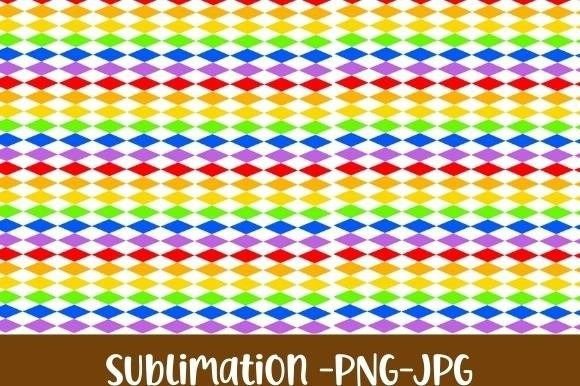
This isn’t generic clipart or low-res wallpaper. It’s an Illustrator vector artwork package built for precision, flexibility, and professional use. Each pattern balances symbolic meaning with clean design sensibility—featuring harmonious color palettes inspired by diverse Pride flags (including Progress, Philadelphia, Intersex, and Trans variations), subtle texture depth, and intentional negative space that lets text and imagery breathe.
What Makes This Digital Paper Stand Out
At its core, Pride Patterns Background delivers three practical advantages most designers and communicators actively seek: scalability without compromise, seamless integration, and ethical intentionality.
- Vector-first clarity: The artboard size is fixed at 1,000 × 1,000px—not arbitrary, but optimized for high-fidelity scaling in both print and digital environments. Because it’s native Illustrator artwork, you can resize infinitely without pixelation, recolor individual elements using global swatches, or extract motifs for custom layouts.
- Ready-to-deploy file set: You receive one JPG (300 DPI, CMYK-ready) and one PNG (300 PPI, transparent background)—no extra conversion steps. That transparency isn’t an afterthought; it’s baked in so overlays, layered web graphics, and branded slide decks retain crisp edges and consistent contrast.
- No hidden limitations: These aren’t watermarked, locked, or licensed for “personal use only.” You’re getting commercial-use rights out of the gate—ideal if you’re a freelancer building client assets, an educator distributing lesson kits, or a small business owner refreshing merch templates.
Where This Background Adds Real Value
It’s easy to assume patterned backgrounds are only for posters or flyers. In practice, Pride Patterns Background shows up where consistency and authenticity intersect—often in places you might not immediately consider.
A university communications team used one of these patterns as the base layer for their annual Pride resource hub—a responsive webpage where each section scrolls over a slightly varied tone of the same motif. The result? Visual continuity without monotony, plus instant recognition during campus-wide email campaigns.
Meanwhile, a freelance UX writer embedded the PNG version behind key interface elements in a mental health app’s June spotlight feature. Because the background has transparency and soft contrast, accessibility checkers registered no contrast violations—even with light-colored body text overlaid. That’s usability built in, not patched on.
For educators, the vector format means they can isolate rainbow stripes, chevrons, or gradient bands and drop them into editable Canva worksheets or Google Slides templates—no need to trace or redraw. One middle school librarian reported students using the motifs to design inclusive book display banners, reinforcing representation through hands-on creation—not just passive consumption.
Practical Considerations Before You Download
Like any digital asset, how well Pride Patterns Background serves you depends partly on how you plan to use it—and what’s already in your toolkit.
If you regularly work in Figma or Adobe XD, know that the vector file imports cleanly (Illustrator .ai files open natively in those tools with full layer fidelity). But if you rely heavily on Affinity Designer or older versions of CorelDRAW, test one pattern first—the transparency handling and gradient mesh may require minor re-rendering.
Color accuracy matters more than you might think. While all files are delivered at 300 DPI, screen calibration affects how the lavender, coral, and deep teal tones appear. If you’re prepping for offset printing, soft-proof the JPG against your printer’s ICC profile before finalizing. And if your brand guidelines specify Pantone references, the vector file allows you to assign spot colors manually—just avoid auto-converting RGB swatches unless you’ve verified output behavior.
Also worth noting: these patterns avoid photorealistic textures or busy micro-details. That’s deliberate. Overly intricate repeats can distract from foreground content or slow down page load times—especially on mobile. The balance here leans toward legibility and performance, not ornamentation for its own sake.
More Than Decoration—A Design Decision With Purpose
Choosing a background isn’t neutral. It signals values, sets emotional tone, and influences how audiences interpret your message before they read a single word. A rushed stock image or poorly scaled graphic can unintentionally dilute sincerity—or worse, feel performative.
Pride Patterns Background avoids that pitfall by centering intention at every stage: color theory grounded in community symbolism, spacing calibrated for readability, and file architecture built for reuse—not one-off decoration. It respects your time (no tedious ungrouping or fixing stray anchor points) and respects your audience (no stereotyped iconography or flattened cultural nuance).
That’s why creators—from indie podcasters adding themed intro slides to HR departments rolling out inclusive benefits guides—keep returning to this set. It doesn’t shout. It supports. It adapts. And it does so without asking you to reinvent the wheel each time.
If your current workflow involves cobbling together free SVGs, stretching low-res JPEGs, or paying premium subscriptions for single-use assets, this digital paper offers a middle path: professional-grade, ethically sourced, and quietly versatile. It won’t solve every design challenge—but it removes friction from dozens of recurring ones.
And in creative work, especially work rooted in visibility and respect, reducing friction isn’t small. It’s how inclusion becomes operational—not aspirational.